A real-time multiplayer card game system designed to translate complex social gameplay into clear, scalable digital interactions, improving player understanding, engagement, and retention across live sessions.
Timeline
Sept 2025
Platform
Mobile, iOS
Role
Product Designer
Year
2025

Enabled scalable multiplayer gameplay aligned with short session lengths, Created a system flexible enough for future live-ops and events
This was a live multiplayer product for the Brazilian market, supporting sessions with up to 10 players.
The experience depended heavily on:
Real-time synchronization across players
Fast-paced decision cycles
Social dynamics like bluffing and risk-taking
Unlike single-player experiences, clarity and timing directly impacted both engagement and fairness.
I designed a round-state system that governed the full lifecycle of a match:
Defined clear phases for play, raise, and resolution
Structured turn progression to avoid ambiguity
Translated real-world bluffing mechanics into predictable interaction flows
This ensured that even in fast multiplayer sessions, players could understand and act without confusion.
I approached the problem as a systems design challenge rather than a visual one.
Instead of focusing on UI first, I structured the underlying gameplay logic to reduce ambiguity and support decision-making under pressure.
The goal was to make the system legible so players always understood:
What state the game is in
What actions are available
What the consequences of those actions are
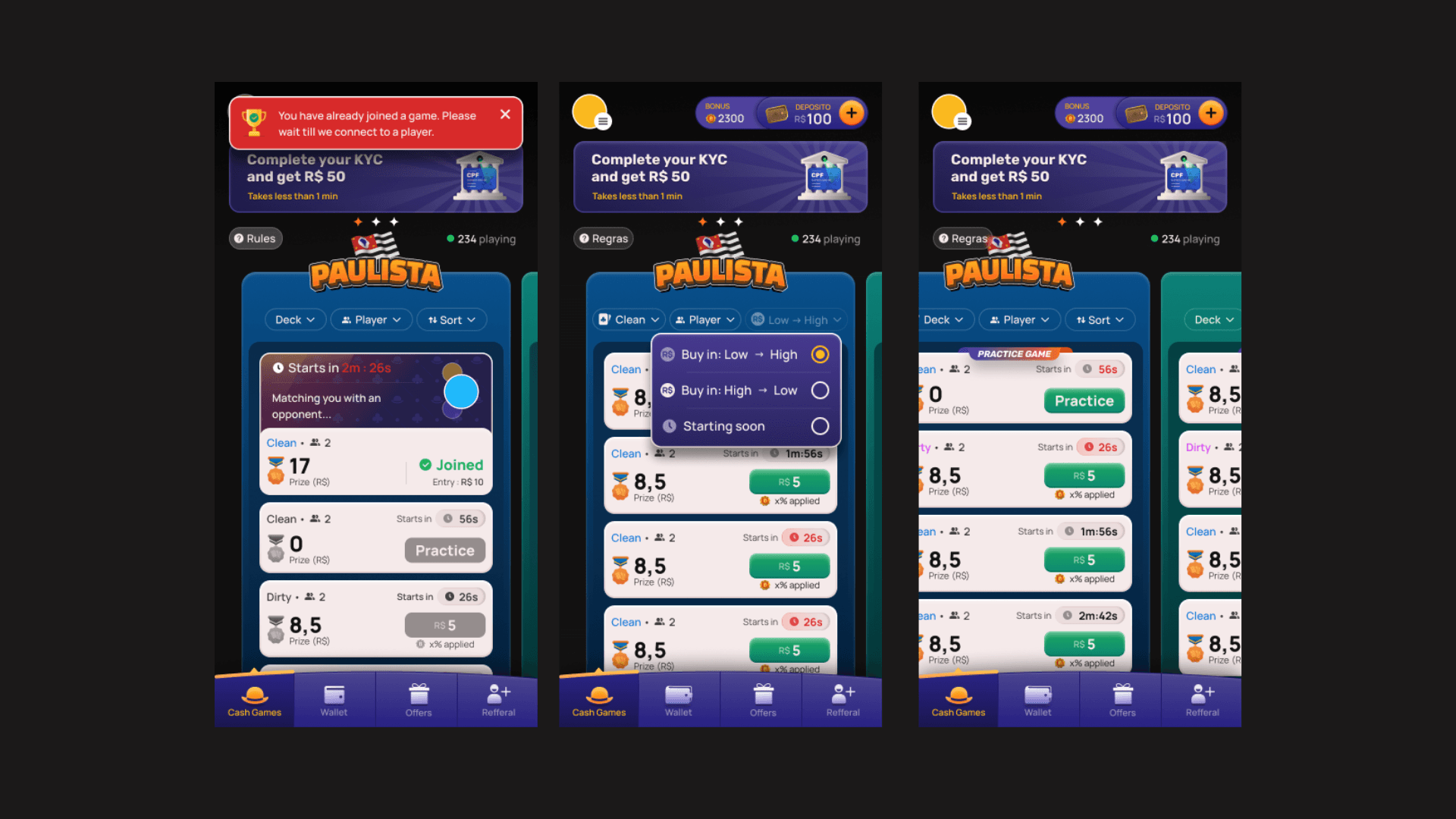
A key issue was early drop-off in competitive modes.
Traditional elimination formats removed players too quickly, especially new users.
To address this, I designed a hybrid tournament system:
Allowed multiple losses to reduce early frustration
Introduced progression filtering to maintain competitiveness
Structured short match cycles (3–5 minutes) aligned with player behaviour
Instead of relying on a single rating, I combined multiple signals to understand both a player’s skill and how confident the system is about that skill.
The system updates after every match, adjusting quickly for new players and stabilizing for experienced ones, so matchmaking becomes more accurate over time.
When pairing players, the system doesn’t just look at their rating it also considers how certain that rating is.
This helps avoid unfair matchups, especially for new players whose skill level is still being figured out.
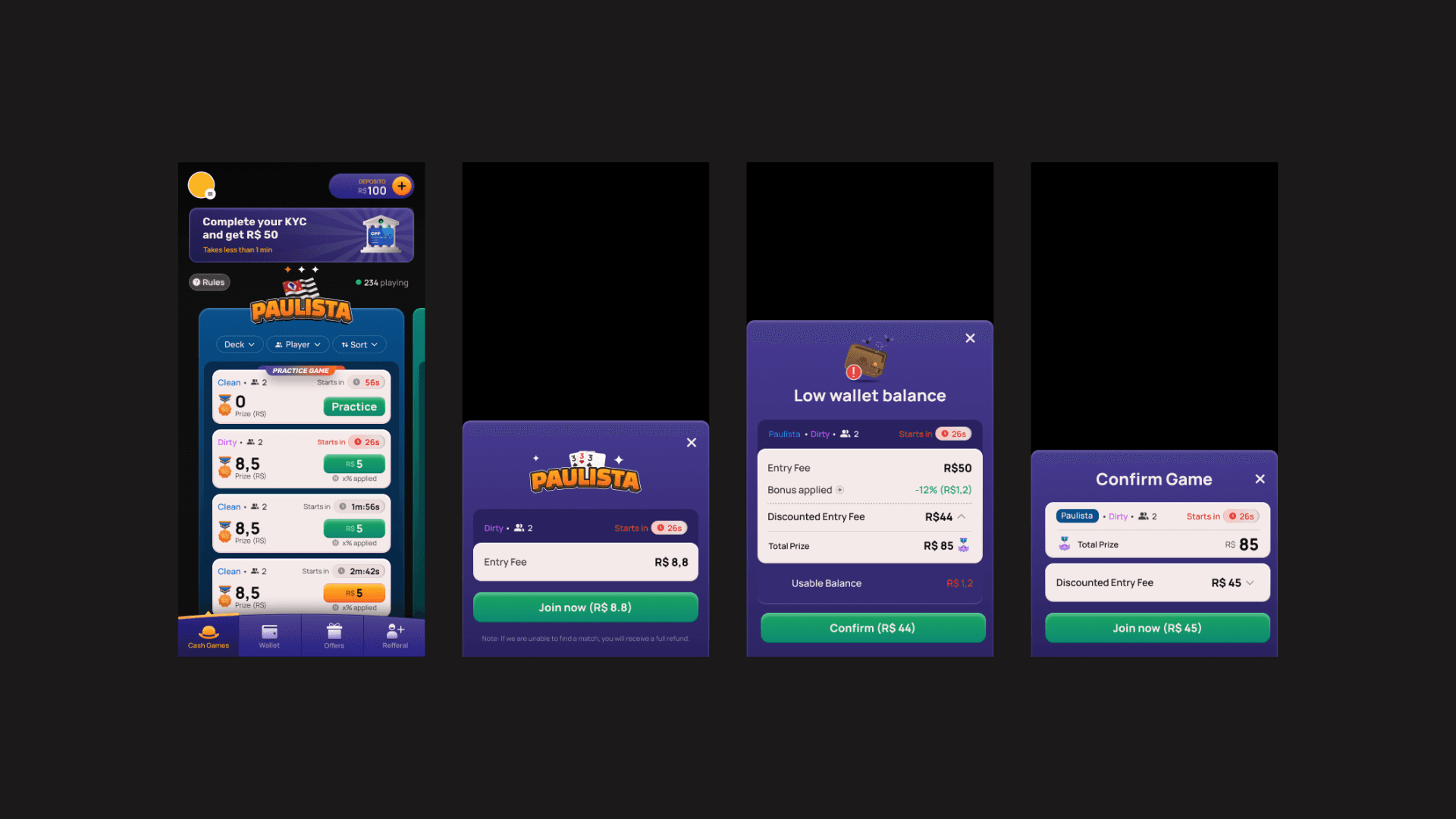
Several trade-offs shaped the system:
Clarity vs speed : ensuring players understood the game without slowing it down
Fairness vs competitiveness : balancing accessibility for new users with depth for experienced players
Engagement vs complexity : maintaining excitement without overwhelming users
These decisions required aligning game logic with user behaviour rather than adding more UI.
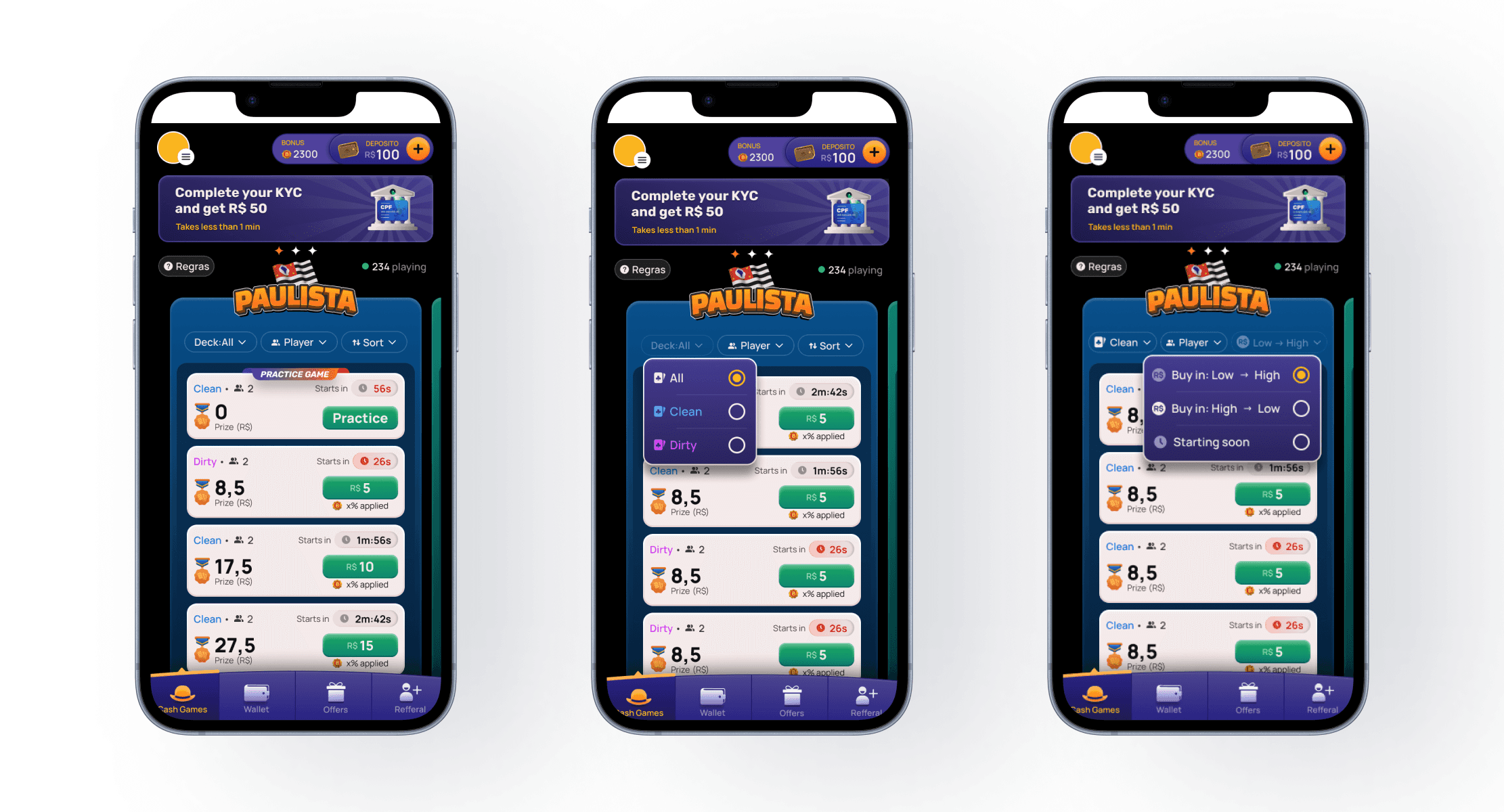
Designing for multiplayer introduced additional constraints:
Actions had to stay synchronized across all players
Network latency could affect timing and perception
Decisions needed to feel immediate, without breaking flow
I structured interactions to maintain consistency across players while keeping the experience responsive and intuitive.
The system doesn’t just track how good a player is it tracks how sure we are about that.
So new players get matched more flexibly, and experienced players get more stable, fair matches.
Reduced early drop-offs by improving tournament accessibility
Maintained engagement across longer play sessions
Enabled scalable multiplayer gameplay aligned with short session lengths
Created a system flexible enough for future live-ops and events
More importantly, this project reinforced the importance of designing systems not just interfaces when user behaviour depends on real-time decisions.