A consultation system that replaces vague pre-trip chats with structured risk alignment between guides and travellers.
Timeline
4 weeks
Platform
Mobile (Field-optimized PWA)
Role
Case Study
Year
2026
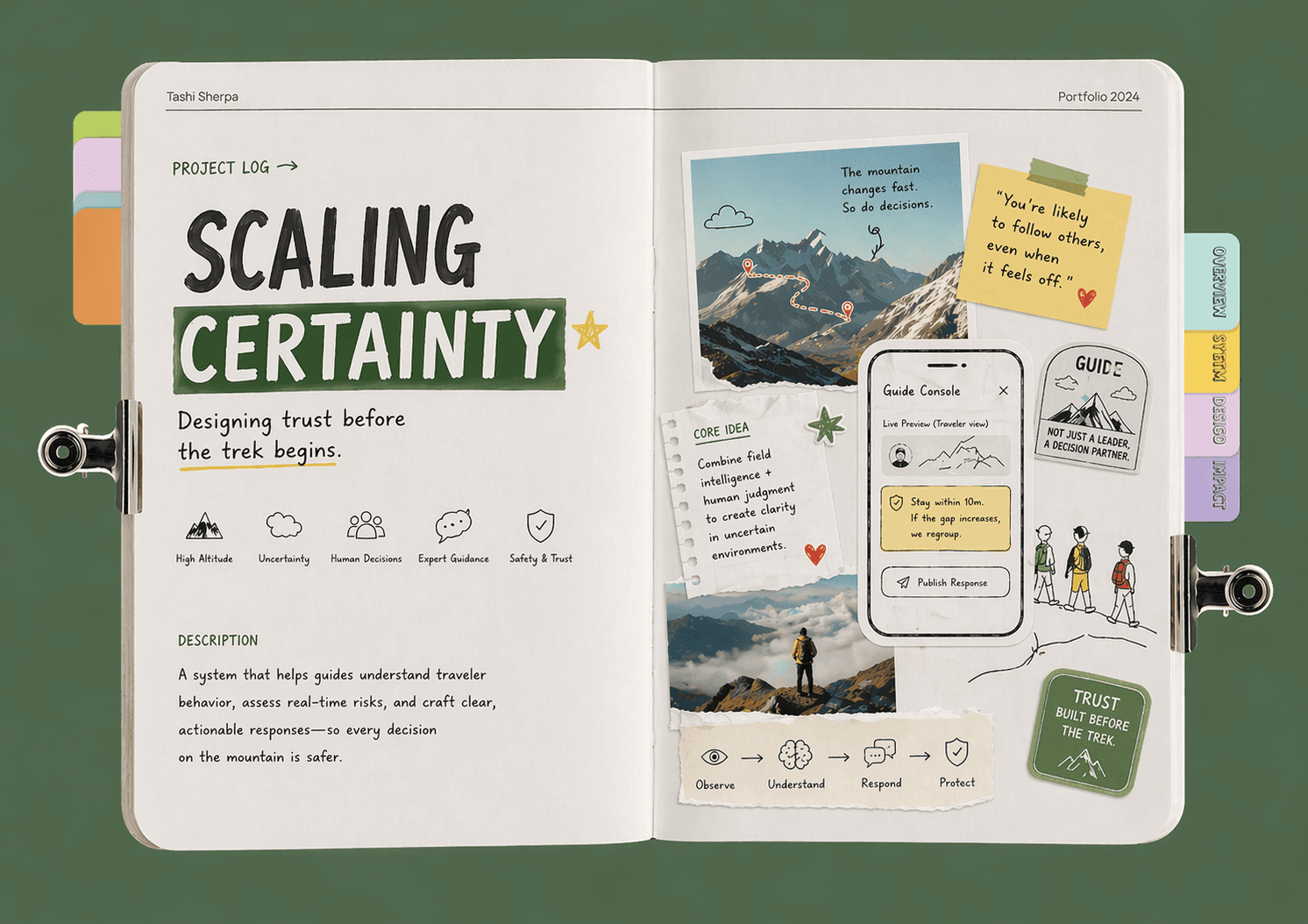
Planning a trek remotely is risky not because people lack information, but because they overestimate themselves.
Independent trek guides operate in a highly competitive and informal ecosystem.
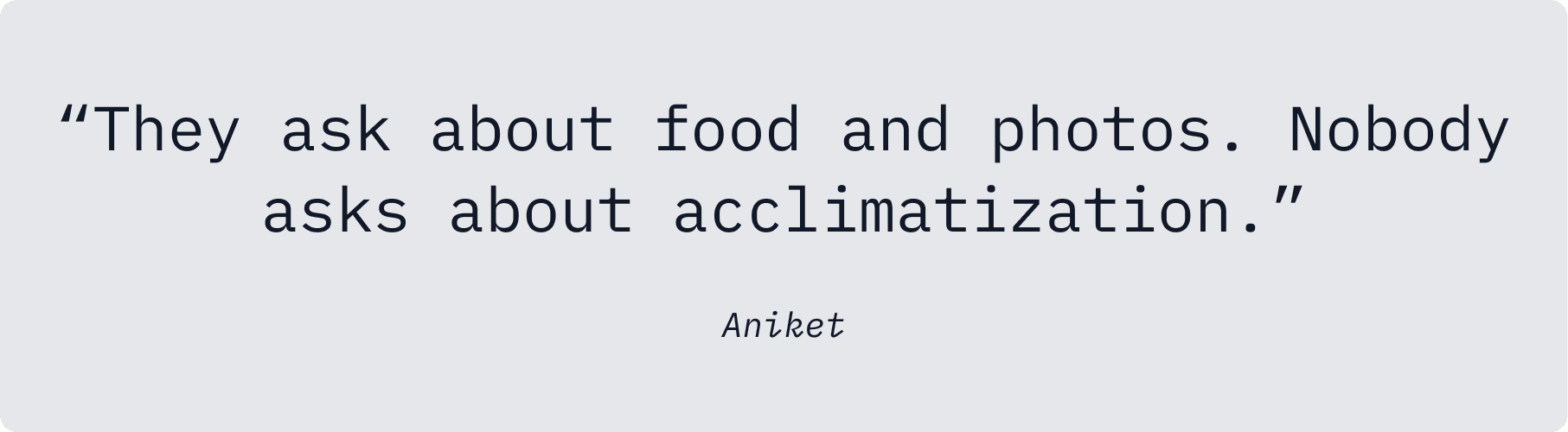
Most communication happens through WhatsApp, calls, or simple forms. These tools capture logistics, but they fail to capture judgment.
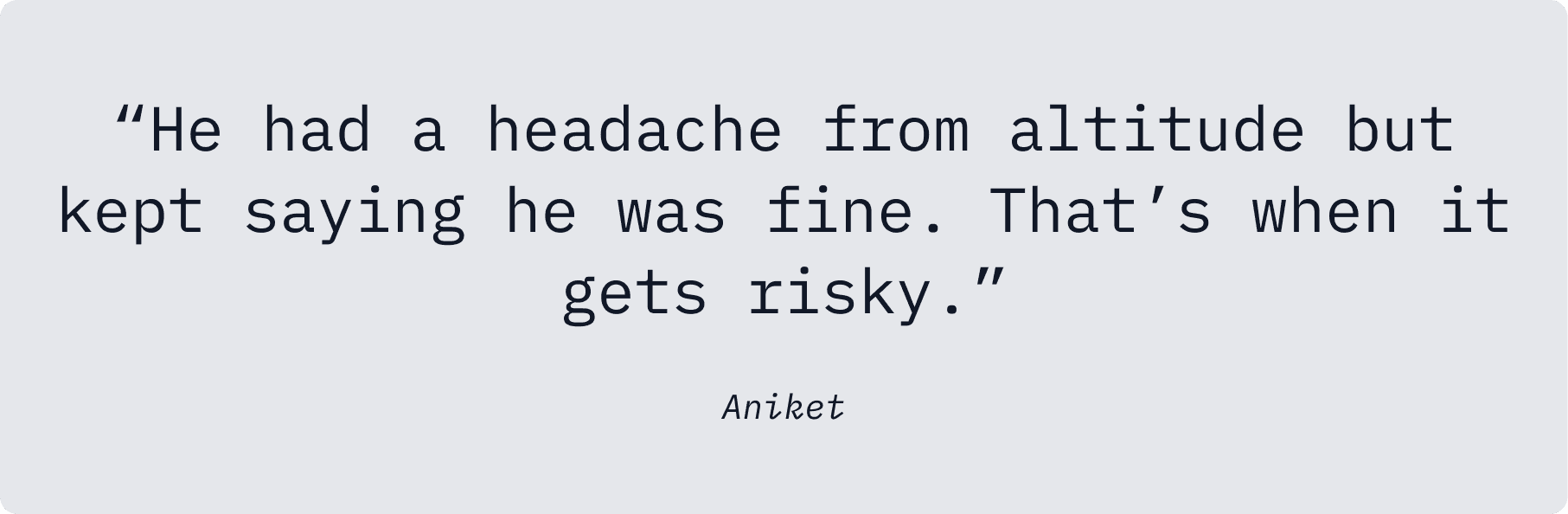
A guide cannot tell how someone will behave under pressure. A traveller cannot understand how a guide makes decisions in real conditions.
Expertise exists, but it is not visible at the moment it matters.
The interaction begins with scenario based prompts. Each situation is designed to surface how a traveller thinks when faced with trade offs between safety and personal goals.
Do they push forward, wait, negotiate, or ignore guidance?
This reveals a hidden profile that is far more reliable than self reported experience.
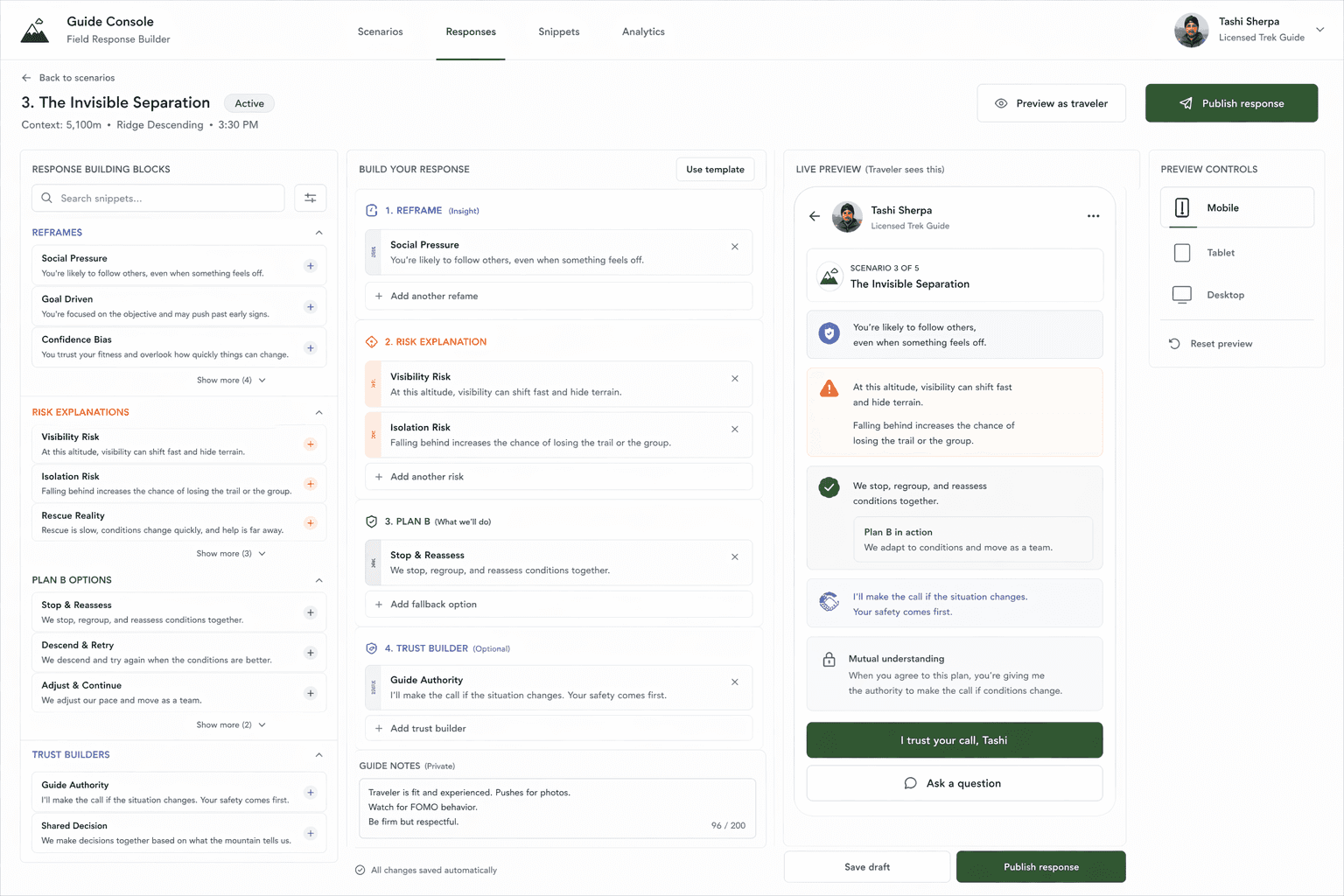
Guides do not write long explanations.
Instead, they assemble responses using pre defined logic blocks. Each response reframes the traveller's thinking, explains the real world consequence, and introduces a clear course of action. This allows guides to communicate expertise quickly without increasing effort.
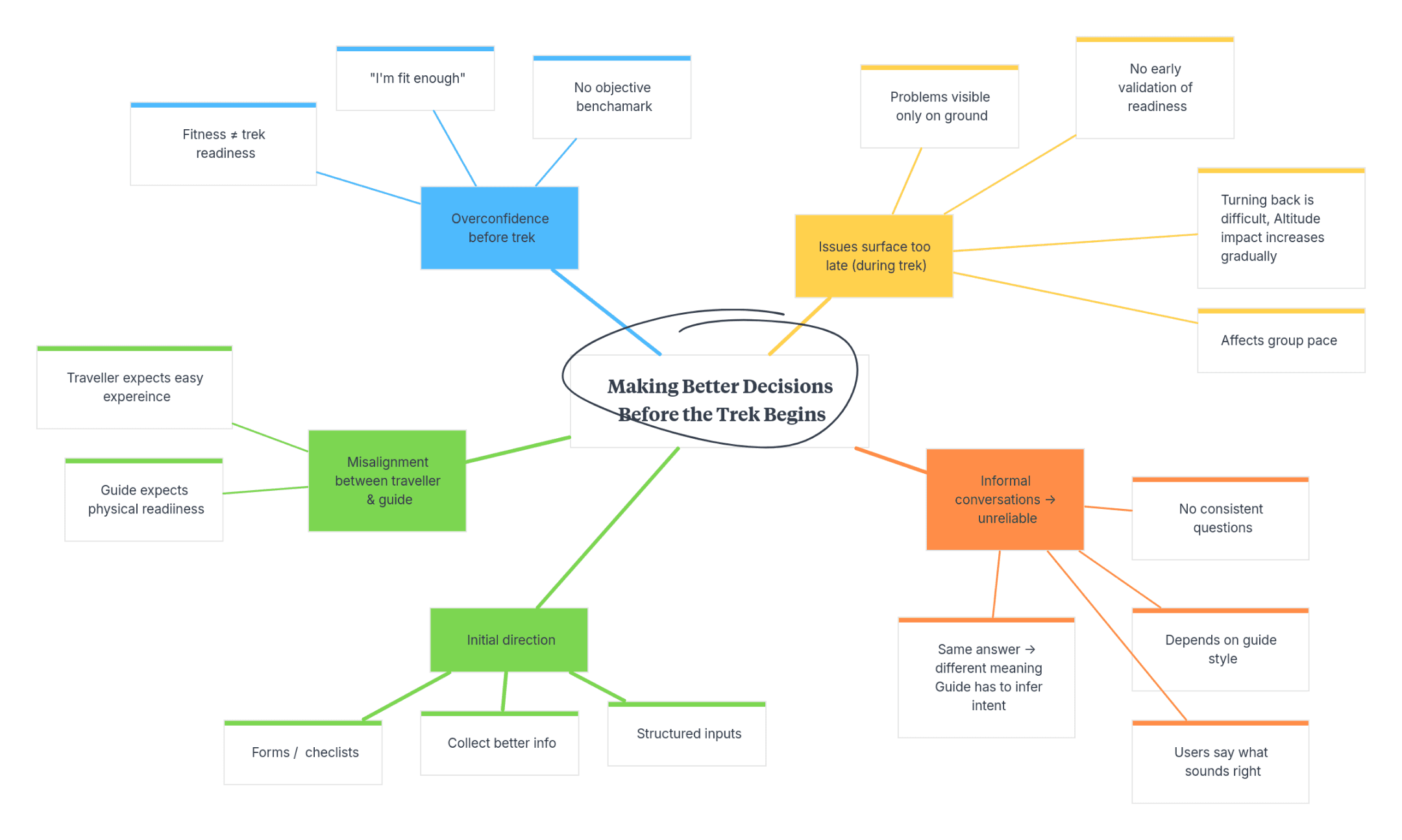
I reframed the consultation process from passive information exchange to active decision making.
Instead of asking travellers to describe themselves, the system places them in realistic situations and observes how they respond.
This shifts the interaction from explaining intent to revealing behaviour.
Research
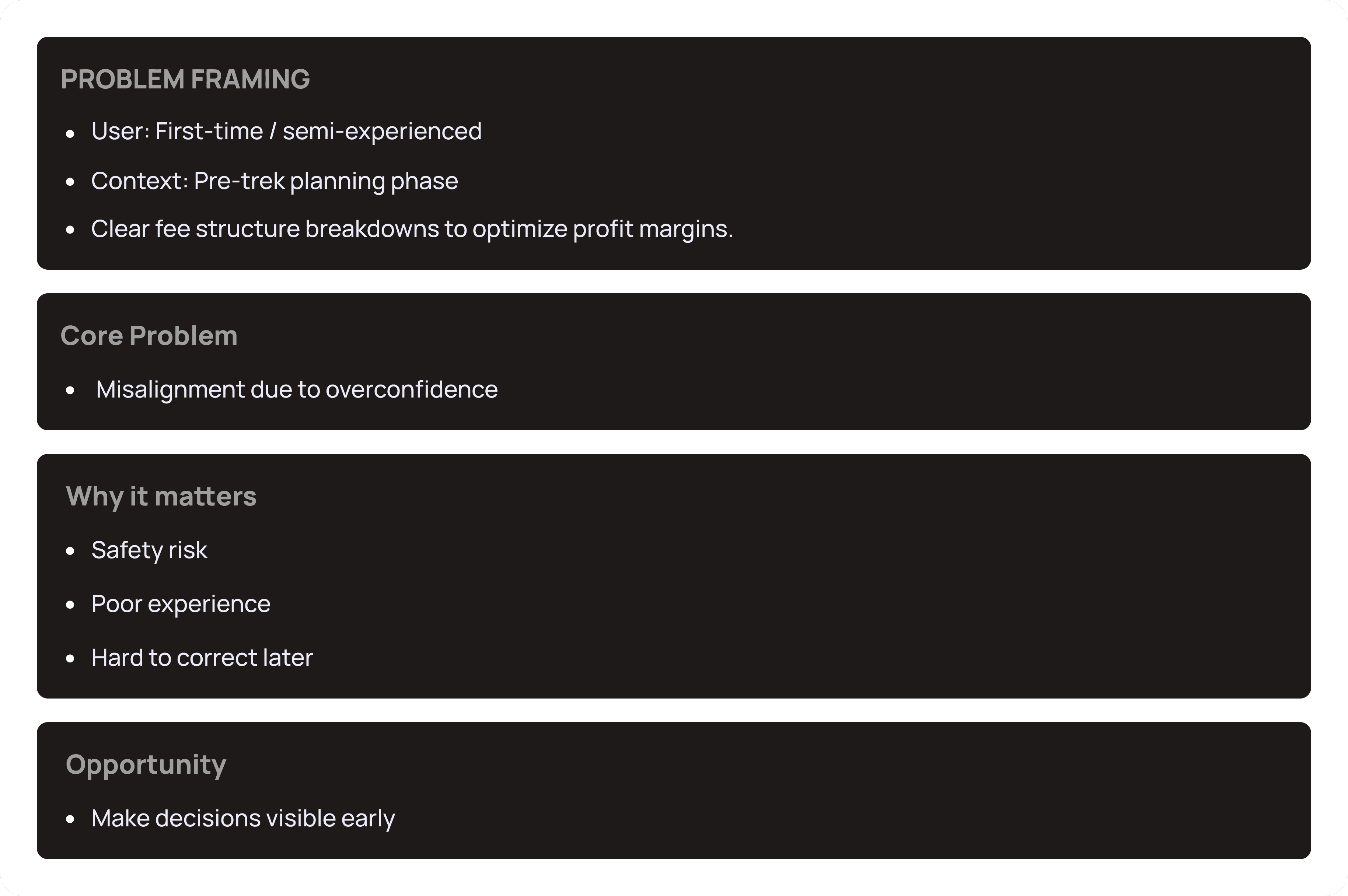
This project is grounded in conversations and observations from a real expedition venture, Roave Experiences.
Roave curates high-intensity, experience-led expeditions across remote regions, where trust between guide and traveller is critical. Their model is built around small groups, high emotional investment, and environments where mistakes have real consequences.
To understand the problem space, I spoke with:
Aniket (Chief Explorer)
Ashutosh (On-ground Network Lead)
and reviewed:
their inquiry flow and onboarding conversations
testimonials and expedition feedback
public storytelling across their social platforms
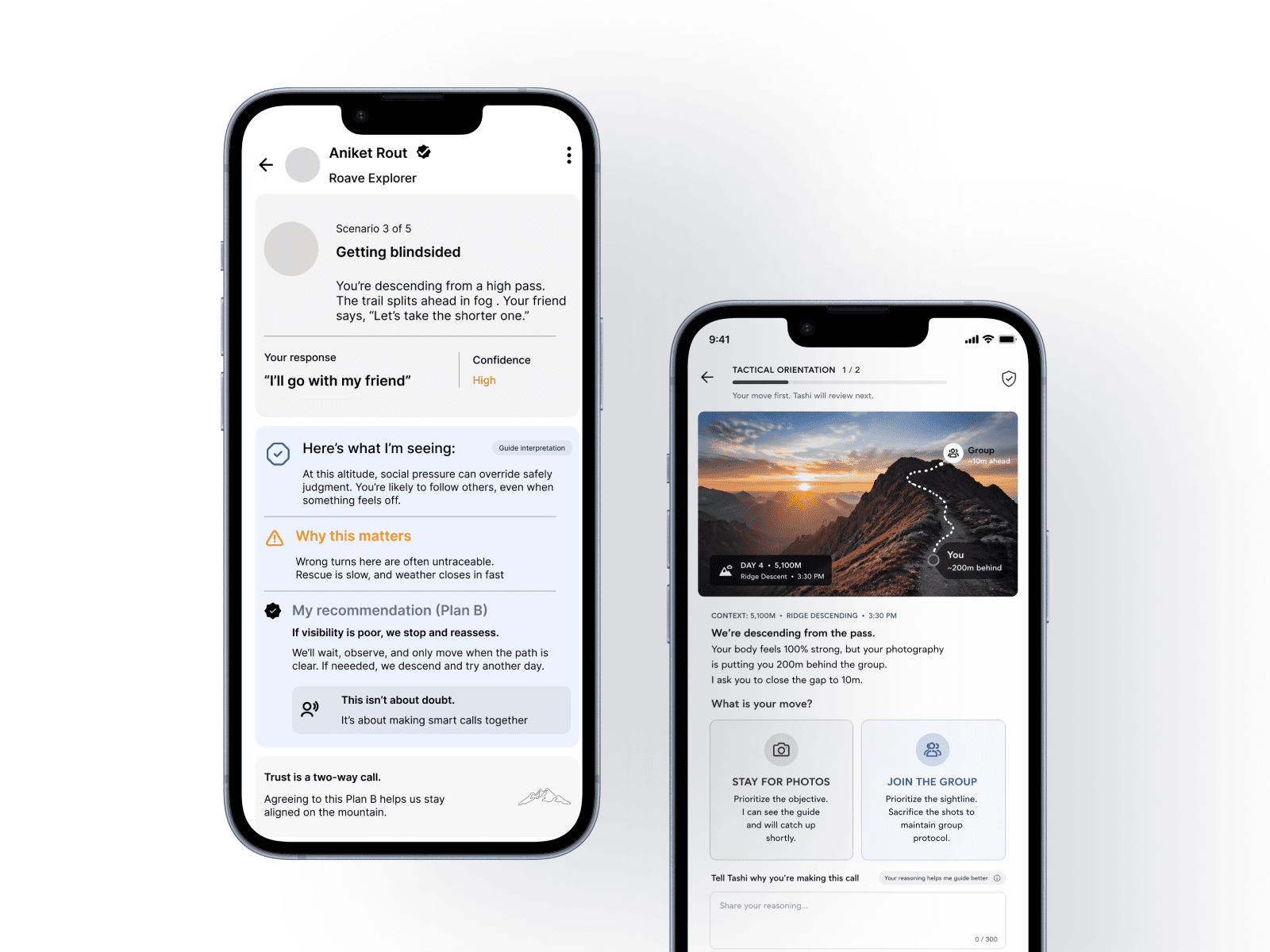
Early Validation
I explored the scenario-based interaction with a small set of participants, including trekkers and with a Roave guide, to understand whether the concept was understandable and engaging.
The goal was not to fully validate behavior, but to see if users could interpret the scenarios and reflect on their decisions.
At the core of the system is the Field Response Card, which translates a traveller’s choice into a clear interpretation of what that decision means in real conditions.
Participants were able to engage with the scenarios and understand the implications of their choices. However, a key limitation emerged users still tended to respond in ways that felt “correct” rather than how they might act in real situations.
This reinforced the idea that the system should focus on revealing decision patterns, but also highlighted that real-world validation would require testing in a live context where actual stakes are involved.
The interaction is designed to end with alignment where both the traveller and guide have a shared understanding of what decisions mean and how situations will be handled during the trek.
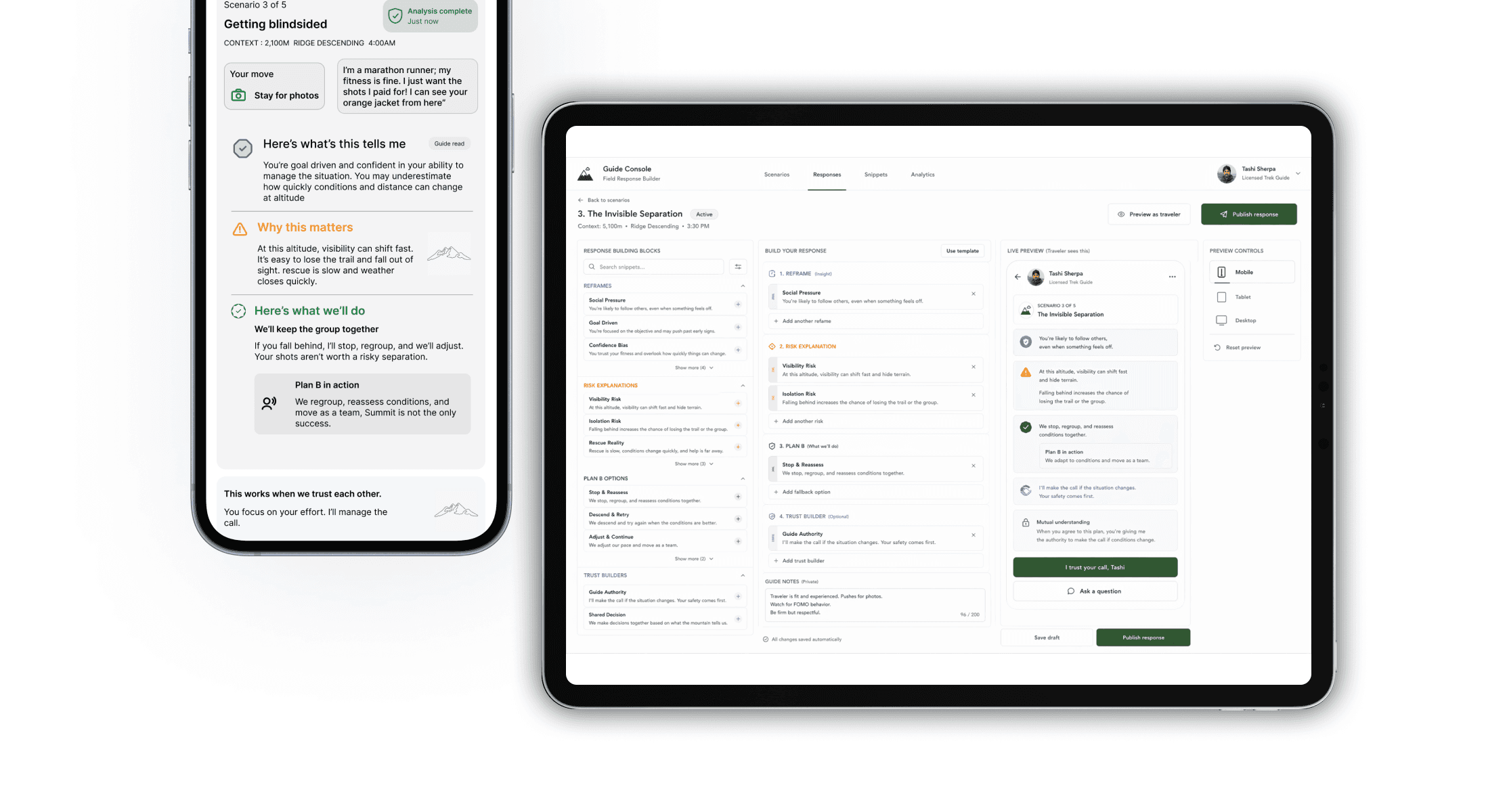
The interaction ends with alignment.
The traveller acknowledges the plan and understands the conditions under which it will change.
This turns a vague agreement into a shared understanding of how decisions will be made on the trail.
What Might Break
This system introduces friction. Travelers may avoid it if positioned incorrectly. Guides may not invest time in low-quality leads. Scenario responses may not always reflect real-world behaviour.
I avoided common patterns that oversimplify decision making. There are no scores or ratings, because risk cannot be reduced to numbers. There are no chatbots, because expertise needs to feel human. There are no dashboards, because clarity is more important than control.
The goal was not to add more information, but to improve judgment.
What the field actually looks like
Expeditions are not just about logistics they are about judgment under pressure. Roave’s experiences operate in environments where:
weather shifts rapidly
terrain is unpredictable
decisions must be made in real time
The guide is not just a facilitator, but the decision-maker responsible for group safety.
However, most of this judgment is invisible during the booking phase.
Key Observations
Travelers present their aspirational self: Many travellers frame themselves as more capable than they are. This is not intentional deception, but a way to avoid rejection and secure a spot in the experience.
Guides rely on intuition, not structure: There is no formal system to evaluate readiness.
Assessment happens through:
• informal conversations
• instinct
• past experience
This makes scaling difficult.
Misalignment appears late: The real gap becomes visible during the expedition:
• pacing issues
• hesitation in critical moments
• inability to handle stress
By then, decisions are reactive, not preventative.
This system shifts the consultation from conversation to alignment.
Why this is still valuable:
The system prioritizes alignment over volume.
Fewer, better-matched bookings are more valuable than more mismatched ones.